![[HERO] Water Treatment vs. Water Softener: What’s the Big Difference?](https://cdn.marblism.com/gyL-2T6x-Up.webp)
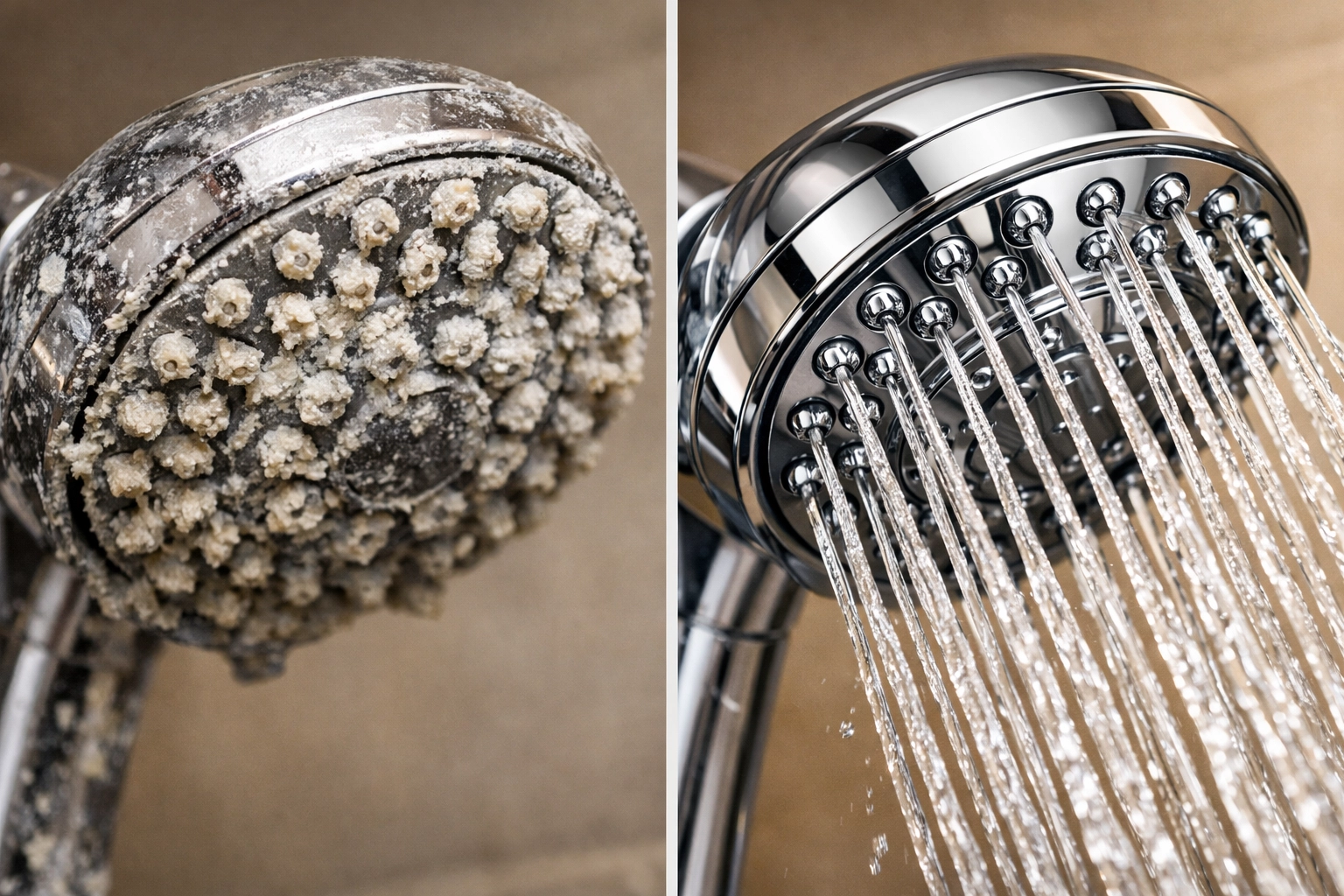
If you’ve ever looked at the white, crusty buildup on your showerhead or noticed that your water tastes a little bit like a swimming pool, you’ve probably started Googling solutions. Pretty quickly, you’ll run into two terms that people tend to toss around like they mean the same thing: water treatment and water softening.
At Your American Plumbing Team, we hear this question all the time. Is a water softener a treatment system? Is water treatment just a fancy name for a softener? The short answer is: a water softener is a type of water treatment, but not all water treatment systems are softeners.
Think of it like vehicles. Every truck is a vehicle, but not every vehicle is a truck. If you need to haul a load of gravel for a new construction site, a sedan isn’t going to cut it. Choosing between a softener and a broader treatment system works the exact same way. You need the right tool for the specific “load” your water is carrying.
In this guide, we’re going to break down the differences so you can make an informed decision for your home, your office, or your next big commercial development.
The Specialist: What Exactly is a Water Softener?
Let’s start with the most common player in the game. A water softener is a specialist. Its one and only job is to deal with hard water.
What is hard water? It’s water that has a high concentration of dissolved minerals, specifically calcium and magnesium. While these minerals aren’t necessarily bad for your health, they are absolute nightmares for your plumbing, your appliances, and your skin.
How it Works: The Magic of Ion Exchange
A water softener doesn’t just “filter” things out in the traditional sense. It uses a process called ion exchange. Inside the tank are millions of tiny resin beads that carry a negative charge. Calcium and magnesium carry a positive charge.
As the hard water flows through the tank, those mineral ions stick to the resin beads like magnets. The system then releases a tiny bit of sodium (salt) into the water to maintain the balance. Eventually, those beads get coated in minerals and need a “bath.” That’s when your system goes into a regeneration cycle, flushing the minerals away with a brine solution and getting the beads ready for round two.
Why You Need One
If you’re seeing these signs, a water softener is your best friend:
- Scale Buildup: That white, chalky stuff on your faucets and inside your water heater.
- Dry Skin and Hair: Hard water prevents soap from lathering and leaves a film on your body that strips away natural oils.
- Stiff Laundry: Your clothes come out of the wash feeling scratchy and looking dull.
- Short Appliance Life: Hard water is the #1 killer of dishwashers, washing machines, and water heaters because it clogs the internal components.
The Umbrella: What is Water Treatment?
Now, let’s zoom out. Water treatment is the broad, overarching category that includes any system designed to improve the quality of your water. While a softener focuses on minerals, a broader water treatment system is designed to tackle contaminants.
If your water smells like rotten eggs, tastes like chemicals, or you’re worried about what might be leaching into the pipes from the city lines, you’re looking for water treatment.
Types of Water Treatment Systems
Because “treatment” is such a big term, it includes several different technologies:
- Carbon Filtration: These are the heavy hitters for taste and odor. They are expert at removing chlorine, VOCs (volatile organic compounds), and that “city water” aftertaste.
- Reverse Osmosis (RO): This is the gold standard for purity. It uses a semi-permeable membrane to strip away almost everything: lead, arsenic, nitrates, and even fluoride. It’s usually installed under the kitchen sink for top-notch drinking water.
- Sediment Filters: These are like a fine mesh screen that catches physical particles like dirt, sand, and rust.
- UV Purification: If you’re on a well, this is a must-have. It uses ultraviolet light to zap bacteria, viruses, and parasites without adding any chemicals to your water.
Our unparalleled commitment to water quality means we don’t just guess what you need. We look at the “story” of your water to figure out which of these systems (or which combination) will actually get you back to normal.
Softener vs. Treatment: A Side-by-Side Look
Feature Water Softener Water Treatment (Filtration/Purification) Primary Goal Remove Calcium & Magnesium Remove Chemicals, Bacteria, & Heavy Metals Main Benefit Protects pipes and appliances Makes water safer and better tasting Method Ion Exchange (Resin & Salt) Physical Barriers, Carbon, or UV Light Maintenance Requires regular salt refills Requires periodic filter or bulb changes Water Feel Makes water feel “slippery” or smooth Water feels the same, but tastes/smells cleaner
Do You Need Both?
This is where things get interesting. Many homeowners and facility managers find that the best solution is a combination.
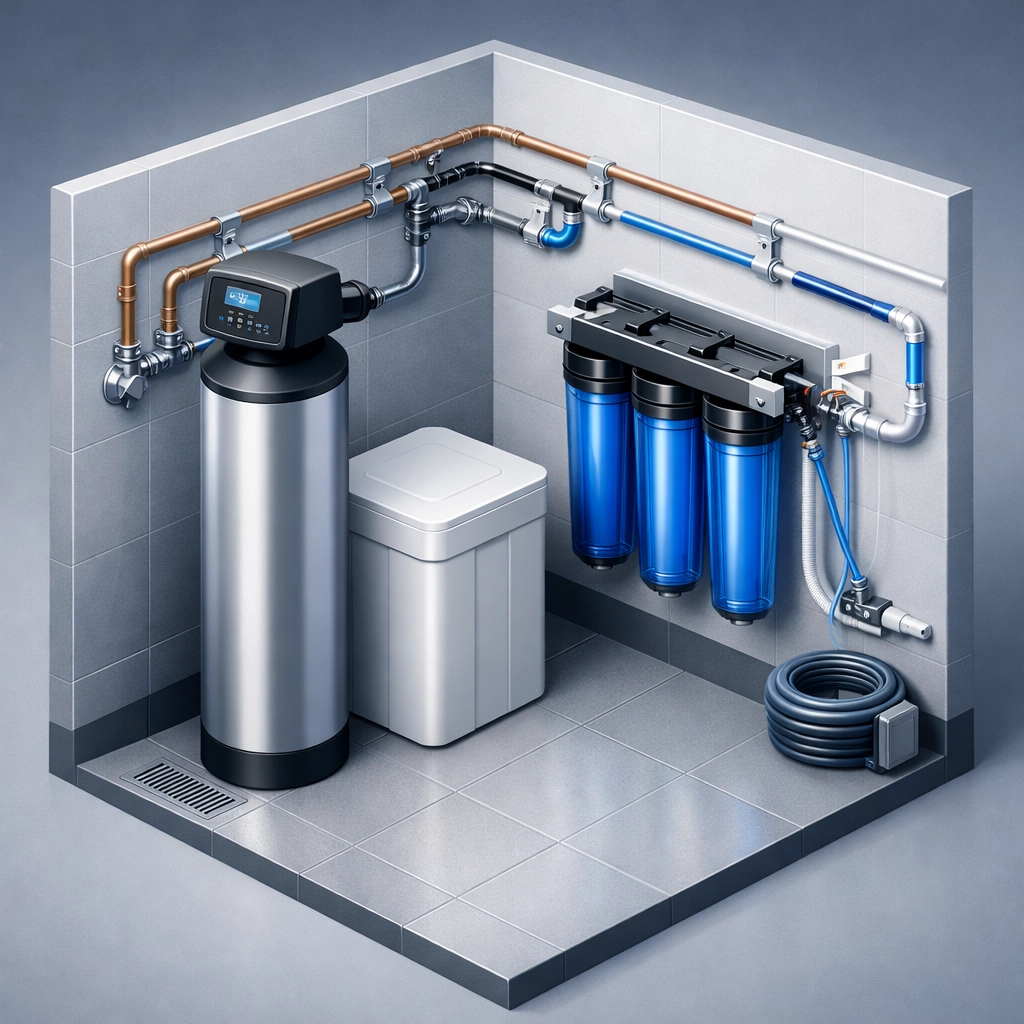
For example, you might have very hard water (needing a softener) that also happens to be heavily chlorinated by the city (needing a carbon filter). In these cases, we often install a whole-house water treatment system that acts as a “pre-filter” before the water ever hits the softener. This not only gives you better water, but it actually protects the resin beads in your softener from being damaged by chlorine, making your whole setup last longer.
If you aren’t sure where to start, you can check out our About Page to see how we approach these problems, or better yet, reach out to us directly through our Contact Page for a water test.
Our Expertise in Commercial Water Softener Installation
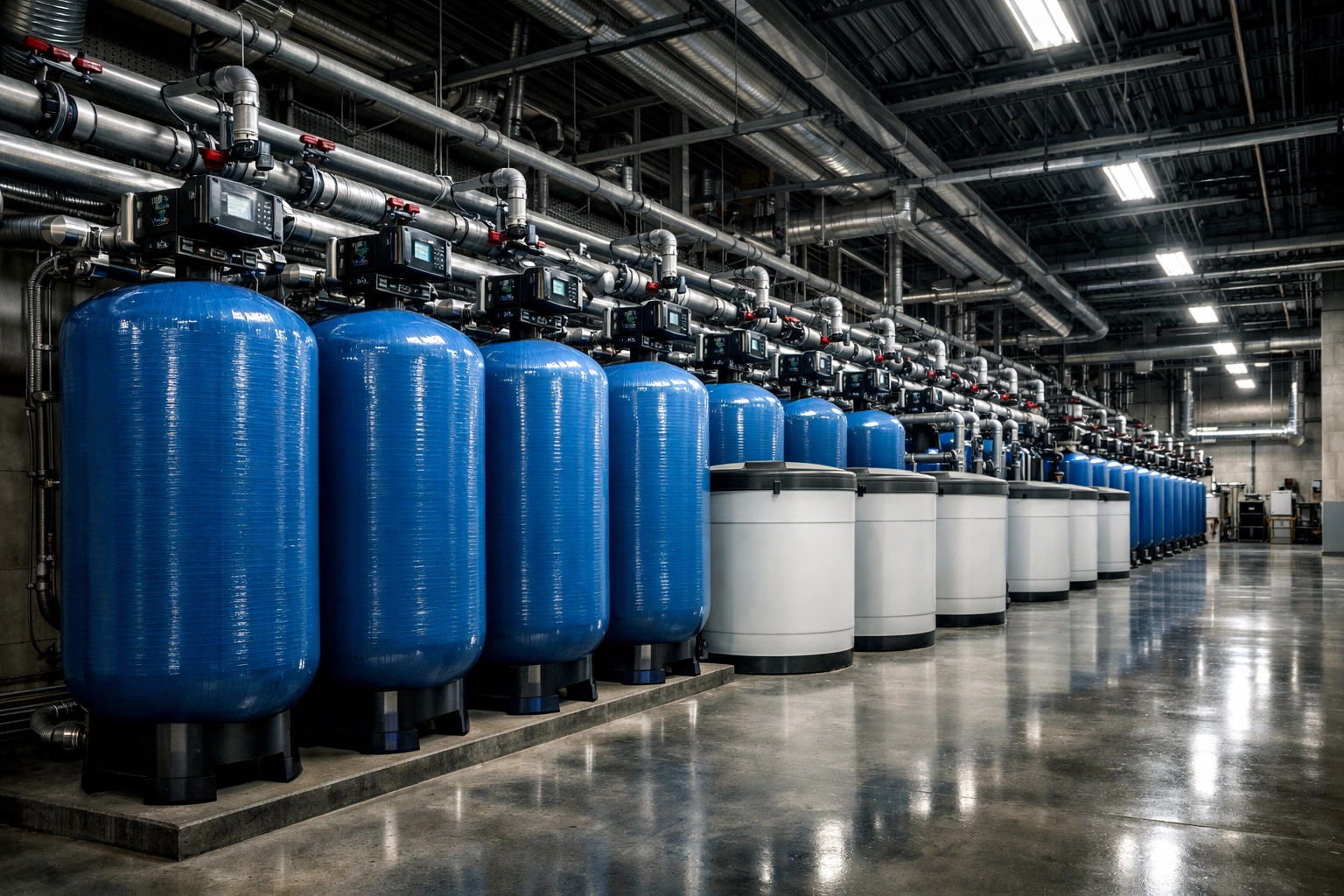
While we love helping homeowners, Your American Plumbing Team also specializes in the big stuff. If you are a commercial property manager or a developer working on new construction, you know that water quality isn’t just a luxury: it’s a massive line item in your maintenance budget.
In a commercial setting: like a hotel, a large apartment complex, or an industrial facility: hard water can be a multi-thousand-dollar disaster. Scale buildup in a massive commercial boiler or cooling tower can lead to skyrocketing energy bills and premature equipment failure.
We are expert bid estimators and installers for commercial-grade water softening systems. We understand the complexities of high-flow rates and the specific code requirements for new construction. Whether you’re looking for an invoice on a repair or a full-scale proposal for a new project, we pride ourselves on being fast, professional, and easy to work with. We don’t just install a tank; we ensure your entire plumbing infrastructure is protected for the long haul.
Choosing the Right Solution for Your Journey
Every building has a story, and every water source has its own set of challenges. Maybe you’re a homeowner tired of scrubbing white spots off your glassware, or maybe you’re a business owner looking to protect a fleet of expensive coffee machines.
The first step is always knowledge. You can’t fix what you haven’t measured.
- Test for Hardness: If it’s over 7 grains per gallon (gpg), you need a softener.
- Test for Contaminants: If you’re worried about lead, chlorine, or bacteria, you need a treatment system.
- Check the TDS: Total Dissolved Solids will tell you how much “stuff” is in your water overall.
We believe in a neighborly approach to plumbing. We aren’t here to sell you a complicated system you don’t need. Our goal is to provide top-notch advice and unparalleled service so that you never have to think about your water quality again.
Final Thoughts: Let’s Get Your Water Right
At the end of the day, whether you choose a specialized water softener or a comprehensive water treatment system, you’re making an investment in your property and your health. Soft water saves you money on soap and repairs, while treated water gives you peace of mind with every glass you drink.
If you’re in the middle of a new construction project or just tired of your current water situation at home, don’t navigate it alone. Your American Plumbing Team has the proven experience to guide you through the bidding, installation, and maintenance process.
Ready to see the difference? Contact us today and let’s get to work. We’ll help you figure out exactly what’s in your water and provide a solution that fits your budget and your needs. Let’s make “hard water” a thing of the past and ensure your plumbing system stays healthy for years to come!
 Your American Plumbing Team
Leave a comment