![[HERO] The Hidden Drip: Everything You Need to Know About Slab Leaks and Underground Repairs](https://cdn.marblism.com/IMUqZXTVmVS.webp)
For most homeowners, “out of sight, out of mind” is a pretty standard way to live. We don’t spend our weekends thinking about the intricate network of pipes buried beneath our feet. However, the Underground Plumbing Systems that support your home are the silent workhorses of your daily life. They bring in the fresh water for your morning coffee and carry away the waste without a second thought: until something goes wrong.
When a leak develops beneath the solid concrete foundation of your home, it’s known as a slab leak. Because these leaks are buried under layers of dirt and stone, they are notoriously difficult to spot. By the time most people notice a problem, the damage has already begun to spread. At Your American Plumbing Team, we’ve seen firsthand how a small “hidden drip” can turn into a major structural headache.
Our mission is to help you catch these issues early, saving your home’s foundation and your wallet from unnecessary stress. We believe in providing top-notch expertise and a neighborly hand to ensure your peace of mind.
What Exactly is an Underground Plumbing System?
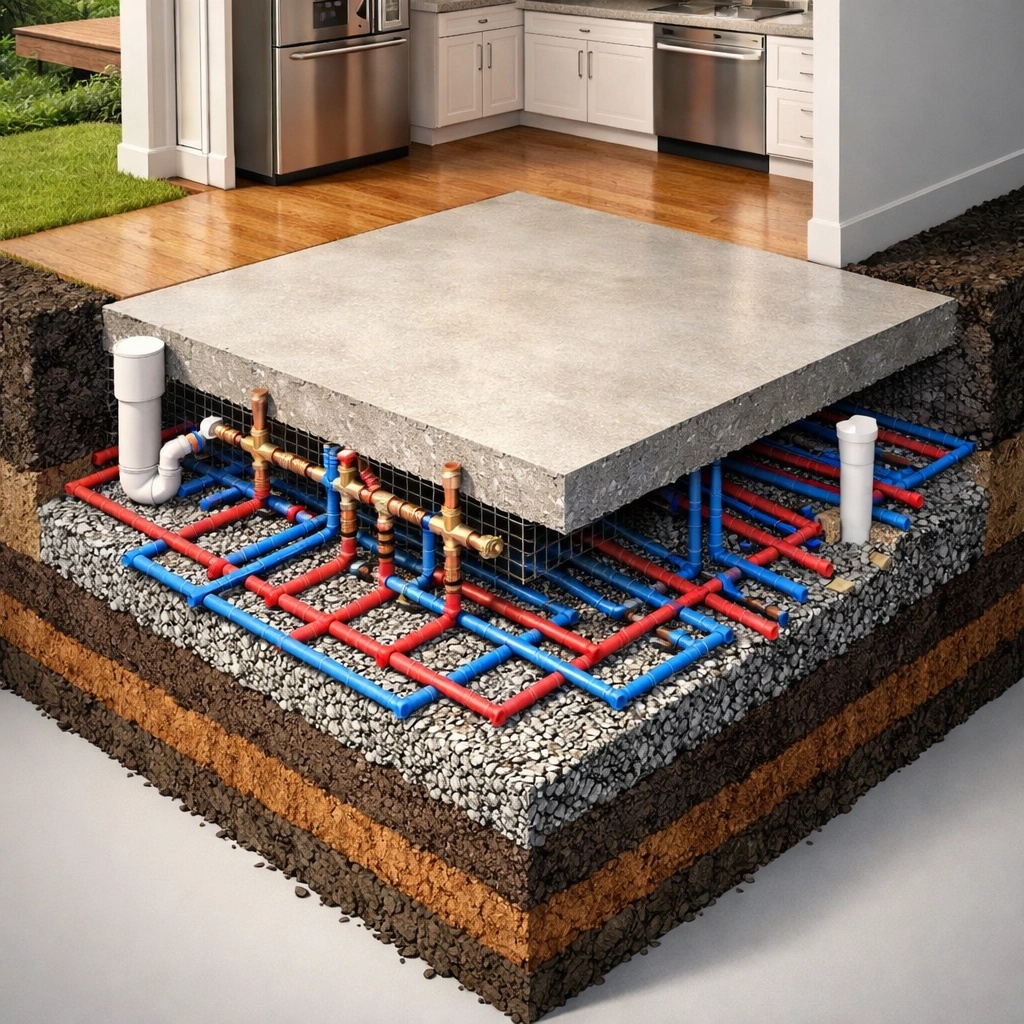
Your home rests on a concrete slab, and beneath that slab lies a complex grid of pipes. These Underground Plumbing Systems are designed to be durable, but they are not invincible. They are subjected to constant pressure from the earth, the weight of the house, and the chemical composition of the water running through them.
In many older homes, these pipes are made of copper or galvanized steel. While these materials were the gold standard for decades, they have a lifespan. When these pipes begin to fail, the water has nowhere to go but into the ground or up through your floor. Understanding that your plumbing doesn’t stop at the walls is the first step in protecting your property.
The Telltale Signs: How to Spot a Slab Leak
Because you can’t see the pipes, you have to play detective. We tell our neighbors to keep an eye (and an ear) out for these common warning signs:
- The Unexplained Sky-High Bill: If your water bill suddenly jumps and you haven’t filled a swimming pool lately, you likely have water escaping somewhere.
- The Sound of Running Water: When the house is quiet, do you hear a faint rushing or hissing sound? If no faucets are on, that sound is likely coming from beneath your floor.
- Warm Spots on the Floor: This is a classic sign of a hot water line leak. If you find your pet constantly napping on one specific, strangely warm patch of linoleum or tile, you might have a slab leak.
- Damp Carpets or Warped Flooring: Water eventually finds a way up. If your carpets feel soggy or your hardwood starts to buckle without a spill, the ground beneath you is likely saturated.
- The Spinning Meter: Go outside and check your water meter. If the little dial is spinning while every tap in the house is closed, you’ve got a leak.
Fixing these issues early is the key to maintaining your home’s structural integrity. If you notice any of these signs, it’s time to call in the professionals. You can contact us here to get an expert eyes-on assessment before the problem grows.
Why Do Underground Pipes Fail?
You might be wondering, “My house is solid; how did a pipe just break?” It’s a fair question. Several factors contribute to the degradation of Underground Plumbing Systems:
1. Soil Movement and Seismic Shifts
The ground is constantly moving. Whether it’s due to the natural settling of the house, “heaving” from clay-heavy soil expanding with moisture, or minor seismic tremors, that movement puts immense stress on rigid pipes. Over time, a pipe can crack or a joint can pull apart.
2. Corrosion and Chemistry
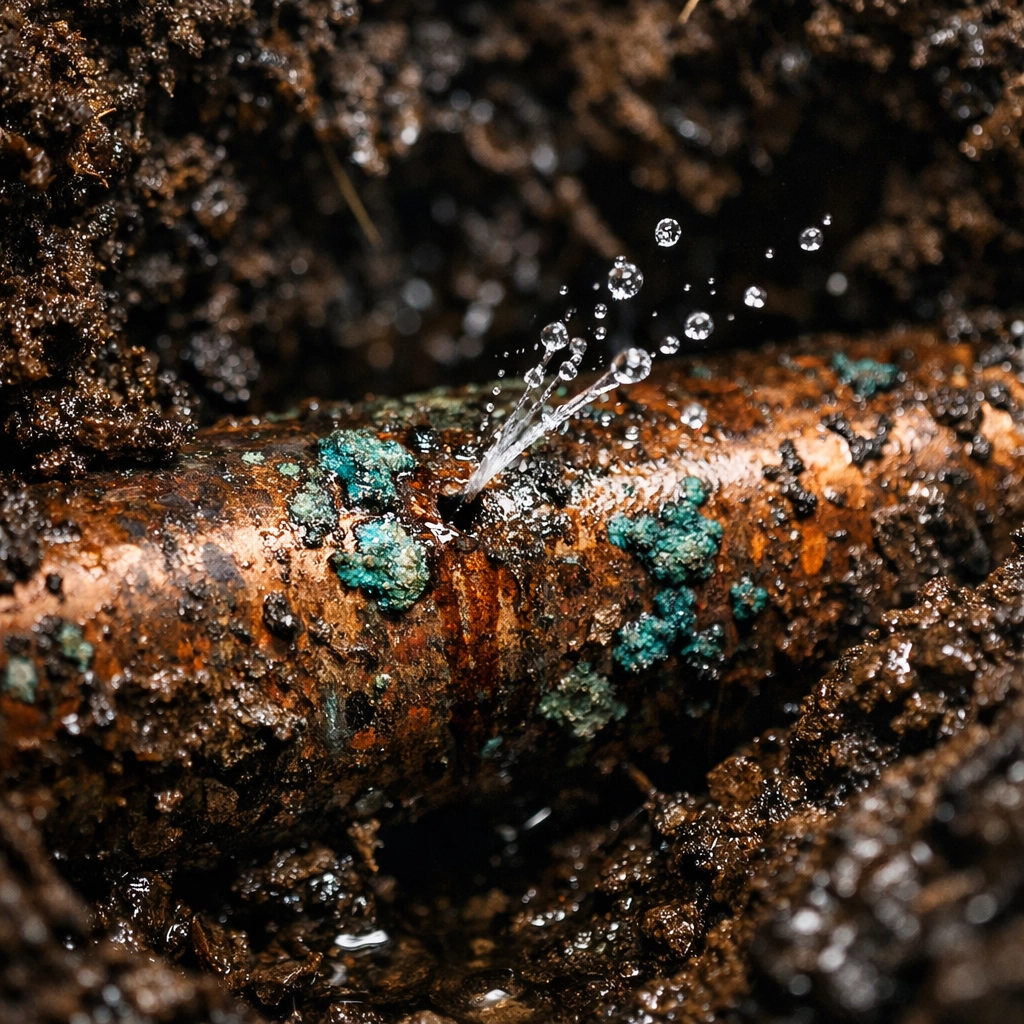
Water isn’t just H2O; it contains minerals and chemicals. Depending on the pH levels of your water, it can actually eat away at the inside of metal pipes. This leads to “pinhole leaks” that start small but quickly erode the surrounding pipe.
3. Friction and Abrasion
As hot water flows through a pipe, the pipe expands. When the water cools, it contracts. If that pipe is in direct contact with concrete or gravel, that constant movement creates friction. Eventually, the pipe wears thin and bursts.
4. Poor Initial Installation
Sometimes, the trouble starts on day one. If the pipes weren’t protected properly during construction: perhaps they were nicked by a shovel or laid against a sharp rock: those small imperfections become major leaks years down the road.
The High Stakes of Ignoring Slab Leaks
At Your American Plumbing Team, we treat every home like it’s our own. We hate seeing a manageable repair turn into a catastrophe because it was ignored. When water pools under your slab, it can cause the soil to wash away, creating “voids.” Without soil to support it, your concrete slab can crack or sink.
This leads to foundation movement, which manifests as cracks in your drywall, doors that won’t close properly, and windows that get stuck. Our proven experience shows that early detection is the only way to avoid these massive repair costs. We want to help you write a success story for your home, not a cautionary tale.
Our Expert Detection and Repair Process
When you call us, we don’t just start digging. We use unparalleled technology to find the exact location of the leak without destroying your home. Our team utilizes electronic amplification equipment and electromagnetic pipeline locators to “listen” through the concrete.
Once we’ve pinpointed the trouble spot in your Underground Plumbing Systems, we discuss the best course of action with you. We believe in a collaborative journey to get your home back to normal.
Modern Repair Solutions:
- Spot Repair: If the rest of the pipe is in great shape, we can open a small area of the slab and repair the specific leak.
- Re-routing: Often the smartest long-term move. Instead of breaking the slab, we run a new line through the walls or attic, bypassing the leaky underground pipe entirely.
- Pipe Lining: In some cases, we can apply an epoxy coating to the inside of the pipe, sealing leaks from the inside out without any digging.

Prevention: Keeping Your Foundation Dry
While you can’t stop the earth from moving, there are steps you can take to protect your pipes:
- Monitor Your Water Pressure: High water pressure is hard on your joints and valves. We recommend keeping your home’s pressure between 40 and 65 PSI.
- Water Softening: If you have hard water, a softener can prevent the mineral buildup that leads to corrosion.
- Regular Inspections: Having an expert check your system every few years can catch “silent” leaks before they cause visible damage.
We are proud to be a part of this community, and we take our responsibility to our neighbors seriously. Whether you’re a new homeowner or have been in your house for decades, we’re here to ensure your comfort and safety.
Trust Your American Plumbing Team
Dealing with a slab leak can feel overwhelming, but you don’t have to face it alone. Our team brings authoritative expertise and a friendly, supportive attitude to every job. We’ve built our reputation on being the reliable choice for complex Underground Plumbing Systems.
If you suspect your home has a hidden drip, don’t wait for the floor to get cold or the walls to crack. We are ready to provide the top-notch service you deserve. Let’s get your plumbing back on track so you can get back to what matters most.
Learn more about our team and our mission or browse our site map for more helpful tips on keeping your home in peak condition.
Your American Plumbing Team: Expert solutions, neighborly service, and a commitment to your home’s future.

 Your American Plumbing Team
Leave a comment