![[HERO] Grease Interceptors: The Unsung Heroes of Your Commercial Kitchen](https://cdn.marblism.com/5DNohLZ3uD4.webp)
If you run a commercial kitchen, you know that the “heart” of your business isn’t just the dining room or the front of the house: it’s the chaotic, fast-paced, high-heat world of the kitchen. You’ve got chefs searing steaks, dishwashers tackling mountains of plates, and prep cooks working their magic. But beneath the surface of all that culinary greatness lies a system that, if ignored, can bring your entire operation to a screeching halt.
We’re talking about grease interceptors.
While they might not be the most glamorous part of your business, these massive underground tanks are the true unsung heroes of your plumbing system. At Your American Plumbing Team, we’ve seen firsthand what happens when these systems are neglected, and we’ve also seen how a well-maintained interceptor keeps a business running like a well-oiled machine. Our mission is to make sure you stay in the latter category. We’re here to give you the expert rundown on why these systems matter, how they work, and why keeping them in top-notch shape is the best investment you can make for your kitchen’s future.
What Exactly is a Grease Interceptor?
Think of a grease interceptor as the ultimate security guard for your plumbing. Its one and only job is to stop Fats, Oils, and Grease (commonly known as FOG) from escaping your kitchen and entering the municipal sewer lines.
Now, you might be thinking, “Wait, don’t I already have a grease trap under the sink?”
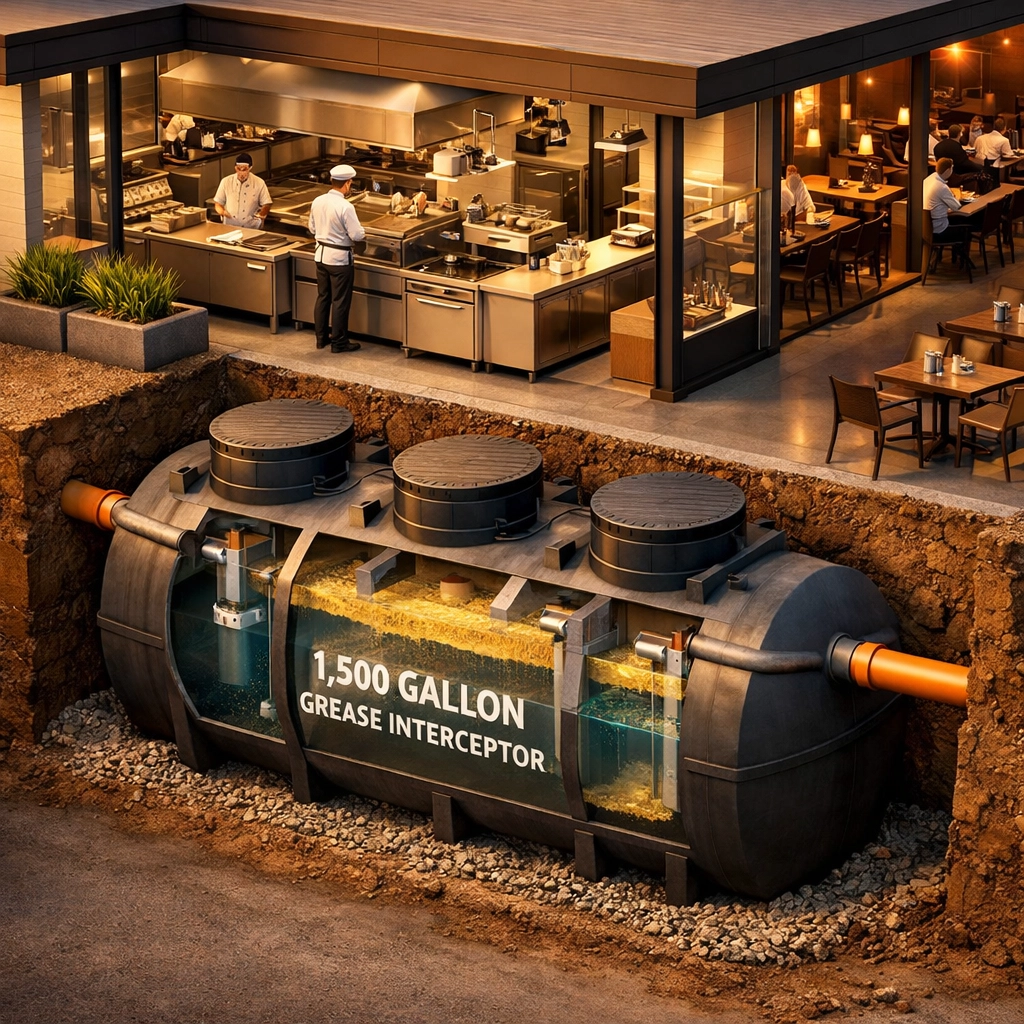
While they serve a similar purpose, a grease interceptor is a different beast entirely. While a grease trap is a small, indoor unit suited for low-volume jobs, a grease interceptor is a heavy-duty, large-capacity tank: typically ranging from 750 to 2,000 gallons: installed underground outside your building. These units handle the massive flow of wastewater generated by high-volume restaurants, hospitals, and schools.
How the Magic Happens: Gravity and Time
The science behind a grease interceptor is surprisingly simple but incredibly effective. It all comes down to gravity-based separation.
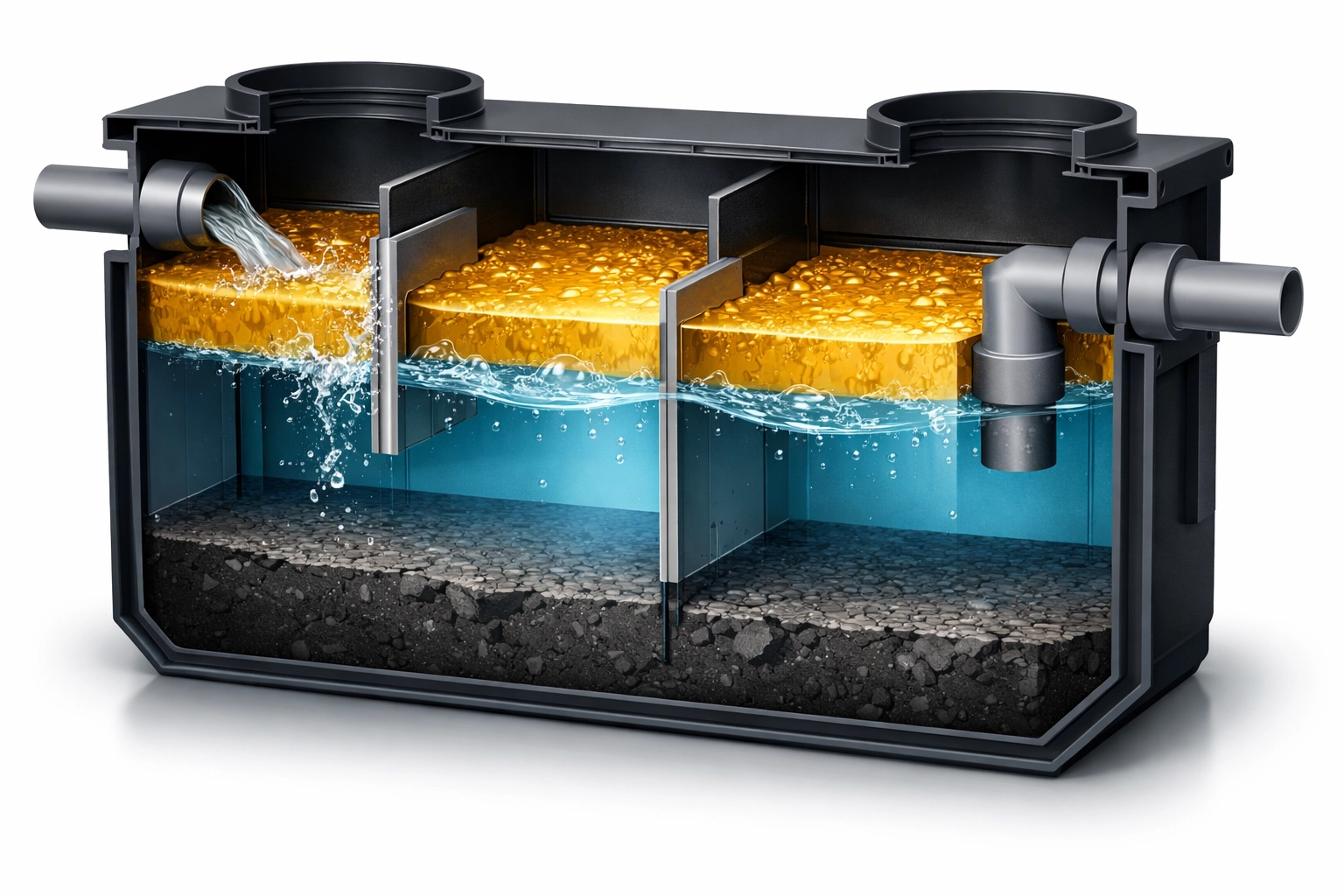
When hot, greasy water leaves your dishwashing station or floor drains, it rushes into the interceptor tank. Inside the tank, there are specialized walls called baffles. These baffles act like speed bumps, slowing down the water flow significantly.
Once the water slows down and begins to cool, nature takes over. Since fats, oils, and grease are less dense than water, they naturally float to the surface. Meanwhile, heavier food solids and debris sink to the bottom, forming a layer of sludge. This leaves a “clear zone” of relatively clean water in the middle.
The clean water then flows under an outlet baffle and continues its journey into the city sewer system. The trapped grease stays at the top, and the solids stay at the bottom, safely tucked away until a professional team (like us!) comes to pump it out. This process depends heavily on retention time: the amount of time the water stays in the tank. If the tank is too full of old grease, the water doesn’t stay long enough to separate, and that’s when the trouble starts.
Why Code Compliance is Your Best Friend
We get it: navigating municipal codes can feel like a headache. But when it comes to grease interceptors, the rules are there for a very good reason. Virtually every commercial food service establishment is required by law to have a functioning, properly sized grease interceptor.
City sewer systems aren’t designed to handle liquid fat. When grease enters the main sewer lines, it cools down, hardens, and clings to the pipe walls. Over time, it attracts other debris, creating massive, rock-hard blockages known as “fatbergs.” These fatbergs can cause sewage to back up into the streets: or worse, back up into your kitchen.
To avoid hefty municipal fines and potential business closure, you must adhere to local plumbing codes. This includes:
- Proper Sizing: Your interceptor must be large enough to handle your kitchen’s specific peak flow.
- Regular Inspections: Authorities often require proof of maintenance.
- Professional Installation: In many jurisdictions, only licensed professionals can install or repair these systems to ensure they meet the rigid standards of the local health department.
At Your American Plumbing Team, we take pride in our unparalleled knowledge of local codes. We don’t just fix pipes; we ensure your business stays compliant so you can focus on what you do best. If you’re unsure if your current setup meets the mark, you can contact us here for a professional assessment.
The “25% Rule” and Proper Maintenance
One of the most common questions we get is, “How often do I really need to pump this thing?”
The industry standard, and often the legal requirement, is the 25% Rule. This means that once the combined volume of floating grease and bottom sludge reaches 25% of the tank’s total capacity, it’s time for a pump-out.
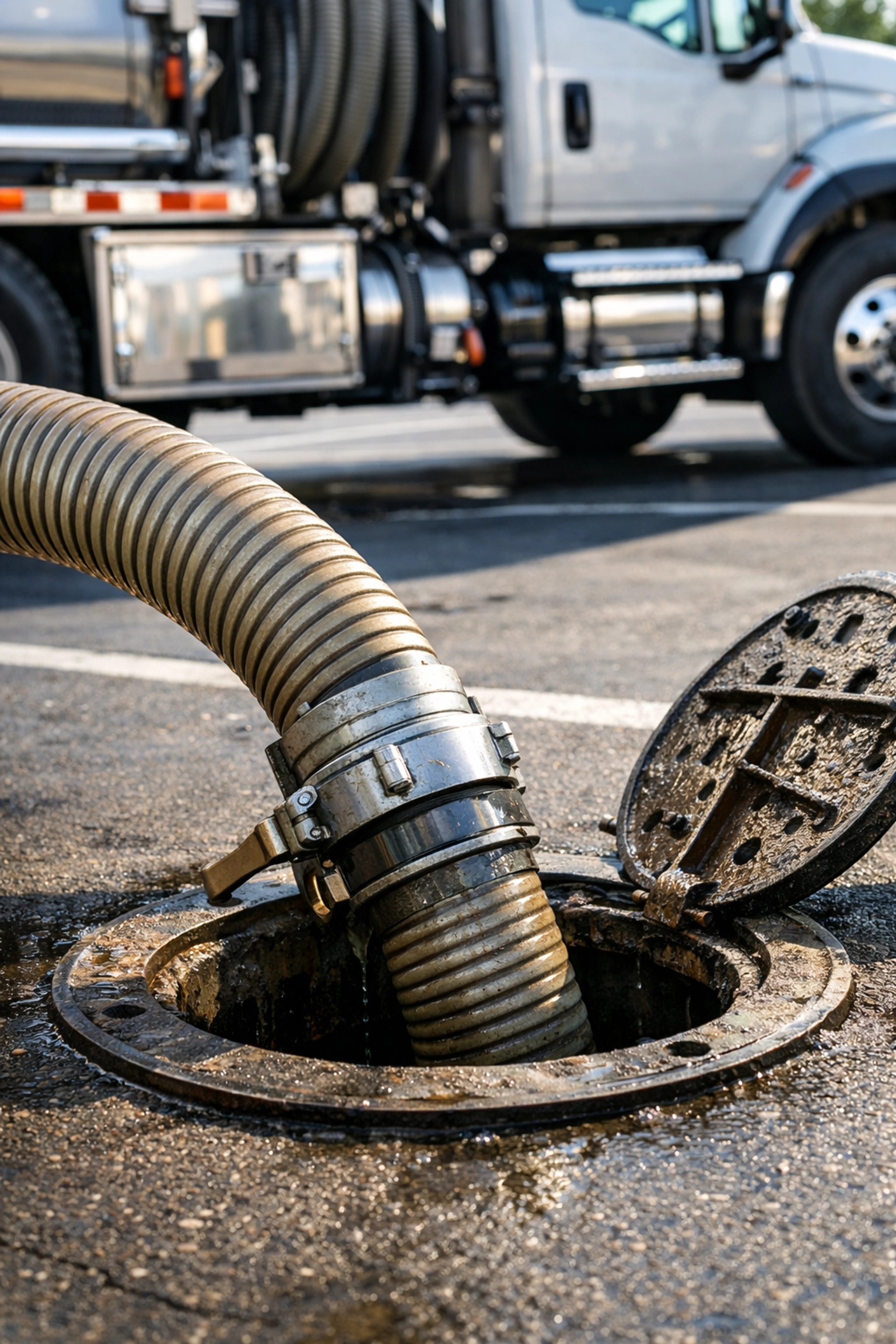
If you wait longer than that, the “retention time” we mentioned earlier drops significantly. The water moves through the tank too fast, and grease starts escaping into the sewer line. This is the danger zone. Depending on how busy your kitchen is, this usually means a professional cleaning every 30 to 90 days.
Ignoring maintenance isn’t just a legal risk; it’s a financial one. A clogged interceptor can lead to:
- Foul Odors: Rotten grease smells exactly like you’d imagine: and your customers will notice.
- Slow Drains: When the tank is full, the water has nowhere to go.
- Emergency Repairs: Hydro-jetting a main line to clear a grease clog is far more expensive than a routine pump-out.
We recommend keeping a detailed maintenance log. Not only does this help you stay on schedule, but it also serves as your “get out of jail free” card if a city inspector ever comes knocking.
Choosing the Right Team for the Job
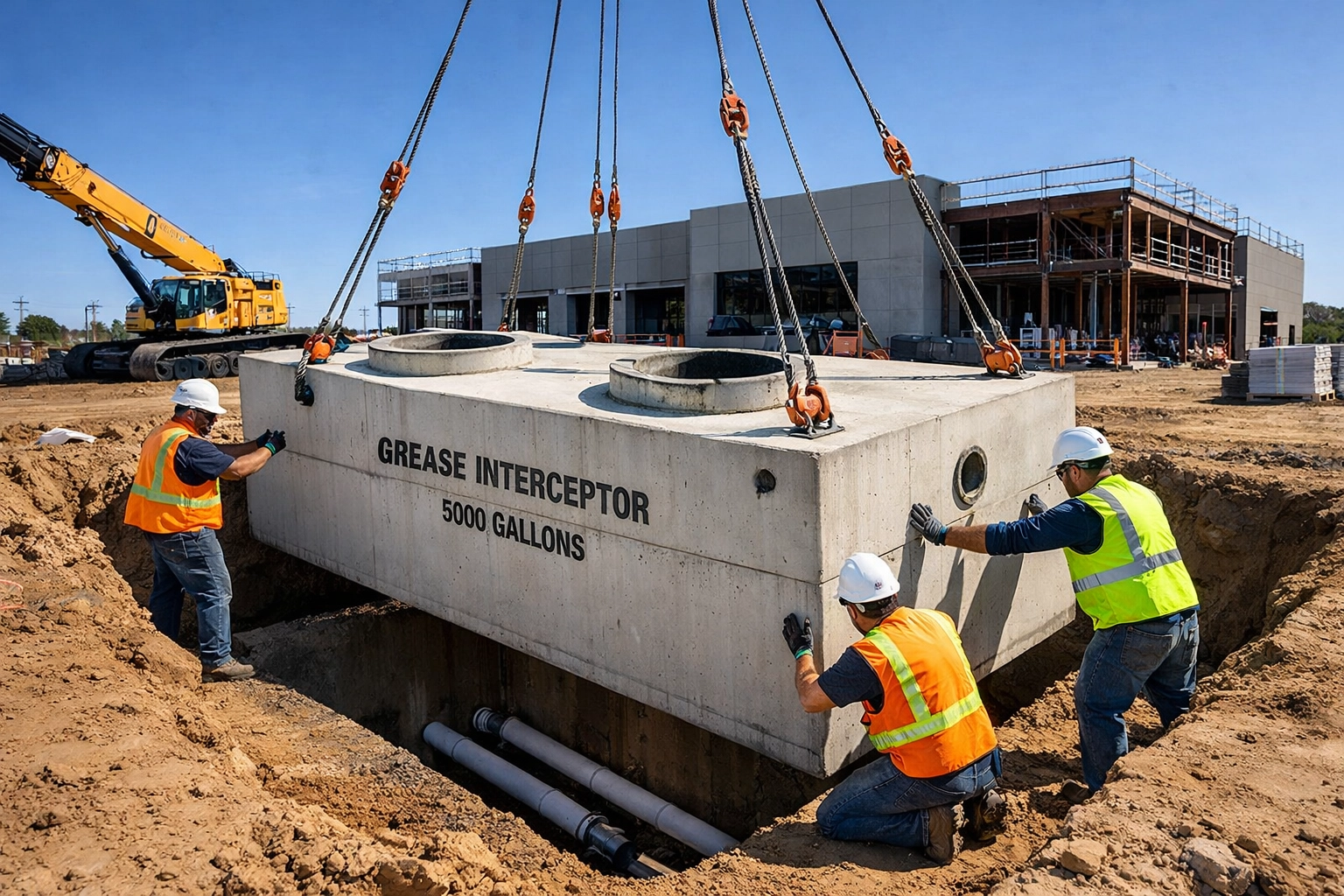
Installing and maintaining a grease interceptor isn’t a DIY project. It requires heavy machinery, specialized knowledge of underground plumbing, and a deep understanding of hydraulic flows.
When we take on a project: whether it’s a new construction bid or a service call: we bring our proven experience and a sense of collective responsibility to the table. We know that if your plumbing fails, your business stops. That’s a weight we take seriously.
Our team doesn’t just look at the pipes; we look at the story of your business. Are you a growing restaurant planning to add more fryers next year? Are you a school cafeteria that only runs at full capacity nine months out of the year? We tailor our solutions to fit your specific journey. Our top-notch estimators work to provide bids that are fair, transparent, and focused on long-term reliability.
We’ve built our reputation on being the neighborly experts you can trust. We’re not here to sell you something you don’t need; we’re here to ensure your comfort and the continued success of your commercial kitchen. You can learn more about our values and the heart behind our company on our About page.
Don’t Wait for the Backup!
The best time to think about your grease interceptor is when everything is working perfectly. Waiting until the drains are overflowing and the health inspector is at the door is a recipe for stress and lost revenue.
Let us handle the dirty work so you can keep the orders flying out of the kitchen. Whether you need a brand-new installation for a construction project or a reliable maintenance partner to keep your current system in check, Your American Plumbing Team is ready to step in.
Our promise is simple: We’ll provide the expert care your system needs to stay compliant, clean, and clog-free.
Ready to get your kitchen back to peak performance? Don’t let grease be the downfall of your dream. Reach out to us today for a consultation or a bid on your next project. We’re fast, we’re efficient, and we’re ready to help you keep your business moving forward.
Give us a call or visit our Contact page to schedule your service. Let’s keep those drains clear and your kitchen cooking!
 Your American Plumbing Team
Leave a comment