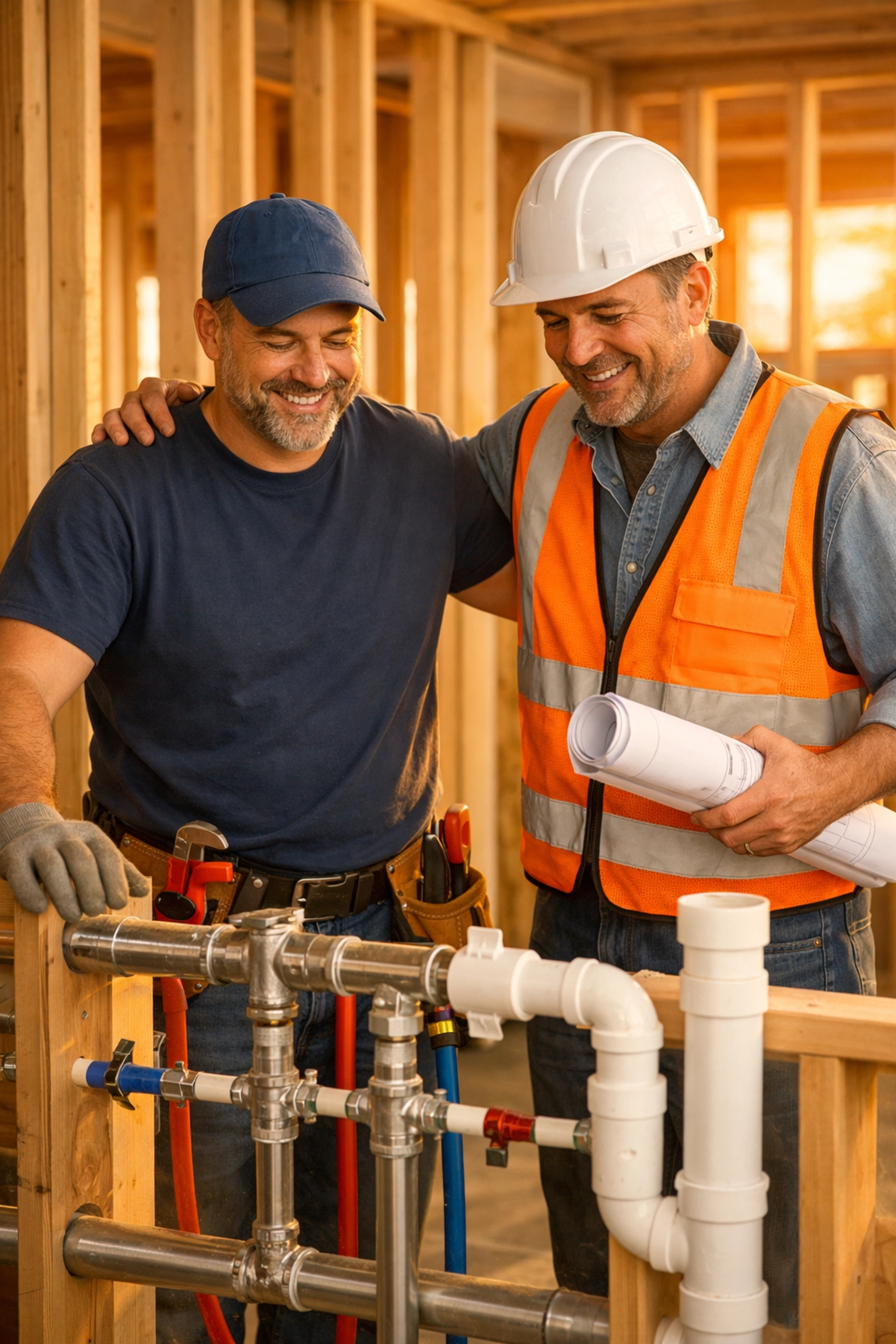
![[HERO] 7 Mistakes You're Making with New Construction Plumbing Rough-ins (and How to Fix Them)](https://cdn.marblism.com/GMNDFOiIwk2.webp)
Starting a new construction project is an absolute thrill. You’ve got the blueprints, the vision, and a site full of potential. But as any seasoned builder or developer knows, the skeleton of the building: the stuff behind the walls: is what really determines the long-term success of the build. Specifically, the plumbing rough-in.
At Your American Plumbing Team, we’ve seen it all. We’ve stepped onto sites where the rough-in looked like a work of art, and we’ve been called in to rescue projects that were one inspection away from a total shutdown. The rough-in phase is your only window of opportunity to get everything right before the drywall goes up and the mistakes become permanent (and expensive).
If you want to ensure your new build is efficient, code-compliant, and built to last, you need to avoid these seven common pitfalls. Here is how we keep things flowing smoothly and how you can, too.
1. Getting the Drain Slope Wrong
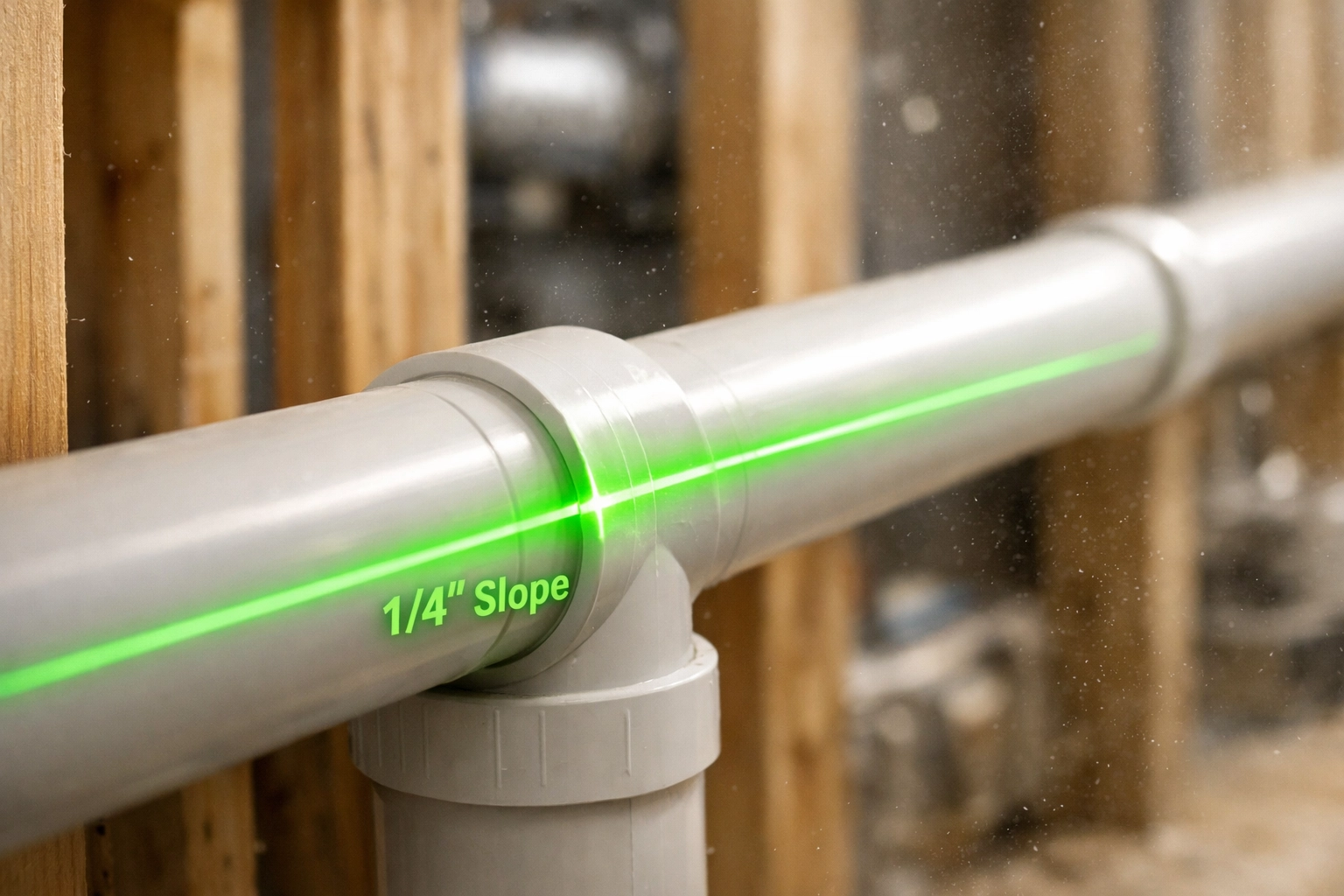
It sounds simple: water flows downhill, right? But in the world of professional plumbing, there is a “Goldilocks zone” for pipe slope. If the slope is too shallow, waste won’t move, and you’ll end up with a clogged mess before the owners even move in. If the slope is too steep, the water actually moves too fast, leaving the solid waste behind to sit and harden in the pipe.
The Fix: The industry standard is typically a quarter-inch drop for every foot of pipe. We don’t guess at this. Our expert team uses laser levels and digital slope-reading tools to ensure every run is precise. When we handle a new construction project, we double-check every horizontal line before a single bracket is tightened. Precision at this stage prevents a lifetime of “slow drain” complaints.
2. Neglecting Proper Venting
Venting is often the most misunderstood part of a rough-in. Your drains need air to breathe. Without proper venting, your plumbing system will struggle against vacuum pressure. You’ll hear those annoying gurgling sounds, or worse, the “P-traps” will get siphoned dry, allowing sewer gases to creep into the building. Nobody wants a brand-new house that smells like a sewer.
The Fix: Every fixture needs access to a vent. We carefully design the Drain, Waste, and Vent (DWV) system to ensure air pressure stays balanced. Whether it’s a standard stack vent or a more complex circuit vent for a commercial layout, we follow local codes to the letter. This ensures that when the water goes down, the air stays in, and the smells stay out. If you’re unsure about your layout, contact us to take a look at your plans.
3. Incorrect Pipe Sizing
Size matters: a lot. We frequently see builders trying to save a few bucks by using smaller diameter pipes where a larger one is required, or conversely, over-engineering a system and wasting material costs. Small pipes lead to low water pressure and frequent backups, while oversized pipes can lead to inefficient flushing and increased costs.
The Fix: We calculate the Fixture Unit Loads for every project. This isn’t just about the number of sinks; it’s about the simultaneous demand on the whole system. We ensure that your main lines and branches are sized perfectly to handle peak usage. We also keep a sharp eye on material compatibility, ensuring that if we are transitioning between materials, we use the correct couplings to prevent leaks or corrosion down the road.
4. Poor Pipe Support and Strapping
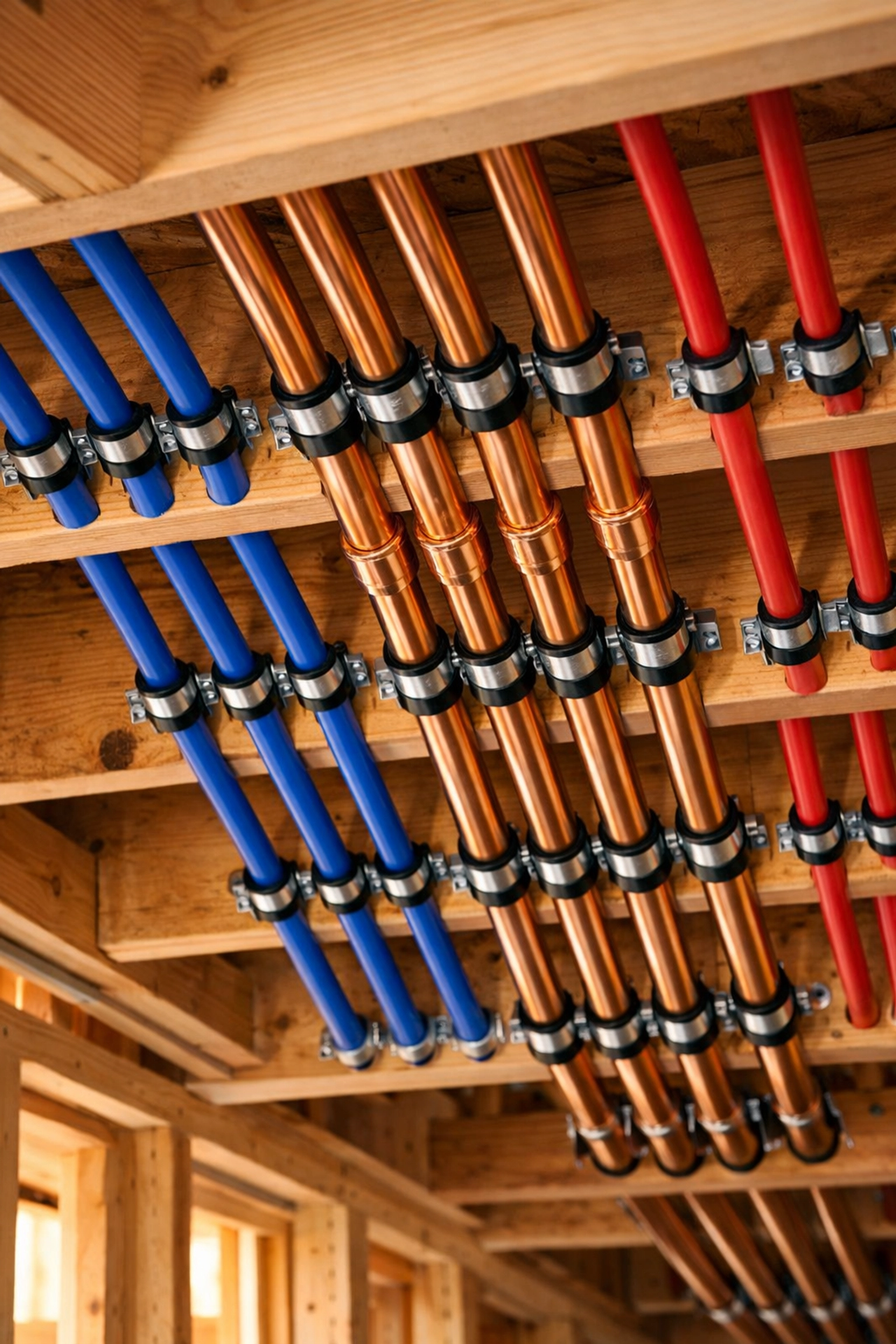
Have you ever been in a house where the walls seem to “thump” or “clatter” every time someone turns off a faucet? That’s “water hammer,” and it’s usually caused by poor pipe support. Inadequate strapping allows pipes to vibrate, sag, or shift under pressure. Over time, a sagging pipe creates a low spot where sediment collects, eventually leading to a blockage.
The Fix: At Your American Plumbing Team, we believe in over-supporting. We use top-notch, heavy-duty hangers and straps to secure every line firmly to the framing. We account for thermal expansion: especially with PEX and PVC: allowing the pipes to move slightly as they heat and cool without rubbing against the studs and creating noise. Our goal is a silent, stable system that the homeowner will never have to think about.
5. Leaving Pipes Vulnerable to Damage
The job site is a busy place. Once the plumbers leave, the electricians, HVAC techs, and drywallers move in. A stray nail or a misplaced screw from a drywall gun can easily puncture a PEX or copper line. These “pinhole” leaks are the worst because they might not show up immediately. They might drip slowly for months, rotting out studs and growing mold before anyone notices.
The Fix: We protect our work like it’s gold. We install steel nail plates (stud guards) on every stud or joist where a pipe passes through. This creates a physical barrier that prevents nails and screws from reaching the plumbing. We also fit all stub-outs with protective sleeves or guards. It’s a small step that provides unparalleled peace of mind for the builder and the future owner.
6. Lack of Coordination and Layout Planning
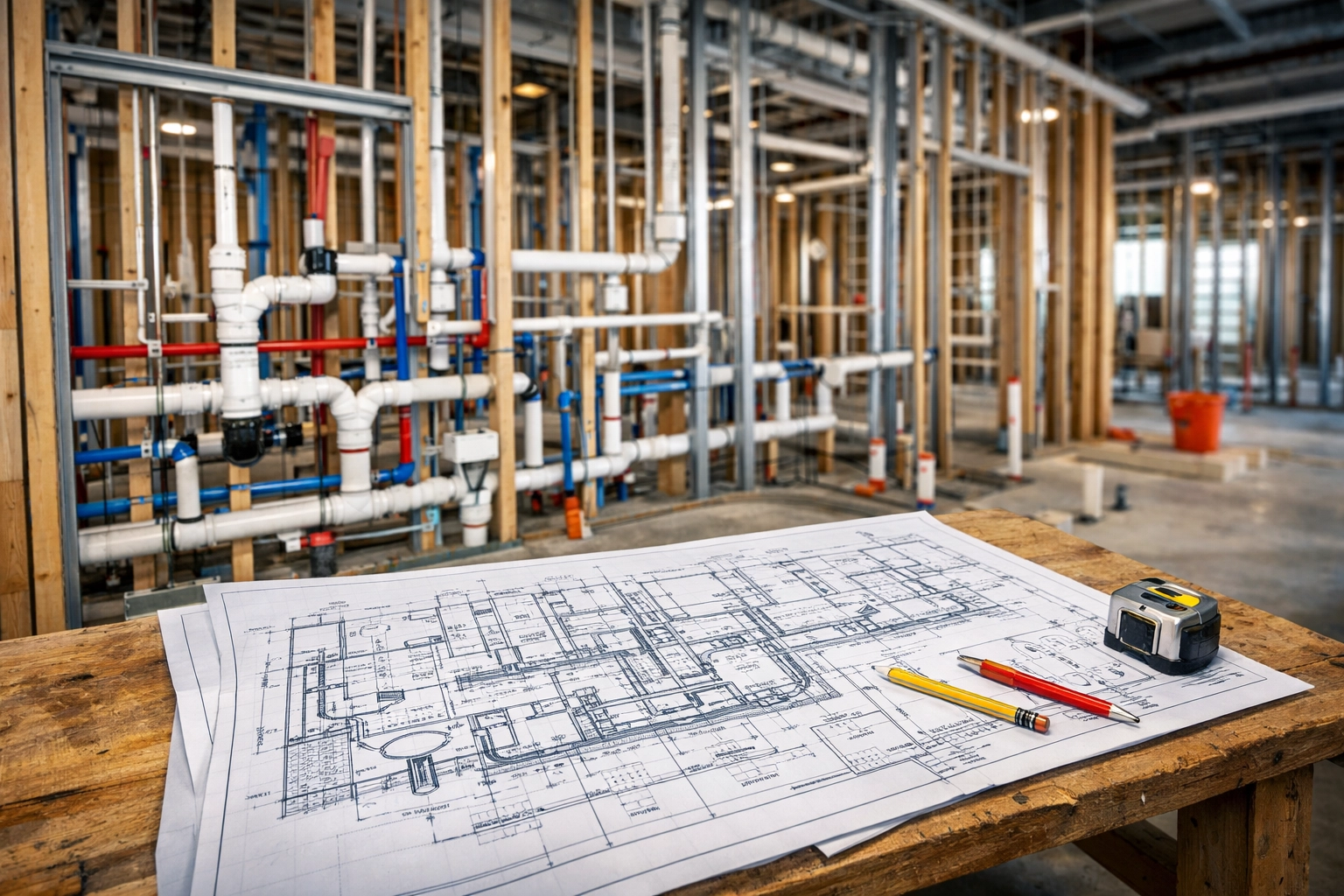
A lot of rough-in mistakes happen because the plumbing layout wasn’t coordinated with the other trades or the final architectural vision. We’ve seen pipes placed right where a structural beam needs to go, or worse, right in the middle of where a kitchen island was supposed to sit. Poor layout planning leads to long water runs, which means the homeowner has to wait five minutes just to get hot water at the master shower.
The Fix: Early collaboration is key. We work closely with site managers and architects during the design phase to optimize the layout. By keeping “wet walls” aligned and minimizing the distance between the water heater and the fixtures, we improve the home’s energy efficiency and overall performance. Our bid estimators are experts at looking at a set of blueprints and identifying potential “clashes” before a single hole is drilled.
7. Using Low-Quality Materials
In the competitive world of new construction, it’s tempting to go with the cheapest materials available to keep the bid low. But cheap valves, thin-walled pipes, and bargain-bin fittings are a recipe for disaster. Joint failures and cracked pipes are far more expensive to fix after the walls are closed than the few dollars saved during the rough-in.
The Fix: We refuse to compromise on quality. We only use proven, code-compliant materials that we trust in our own homes. From high-grade PEX to durable brass fittings, the components we install are designed to last for decades. We take pride in our “buy once, cry once” philosophy: it’s better to invest in quality now than to pay for a massive restoration project later. You can learn more about our commitment to quality on our About page.
Why the Rough-In Phase is Your Best Friend
The rough-in is the heartbeat of your plumbing system. It is the only time everything is visible and accessible. This is the moment to verify every connection, pressure test every line, and ensure the foundation is rock solid.
At Your American Plumbing Team, we don’t just “install pipes.” We provide a reliable infrastructure for your new build. Our team is trained to spot these seven mistakes from a mile away, and we have the expert skills to fix them: or better yet, prevent them from happening in the first place.
Whether you are a developer working on a massive multi-family complex or a homeowner building your dream house, you deserve a plumbing team that cares about the details. We bring a neighborly attitude combined with a professional, “get it done right” work ethic to every site.
Partner with the Experts
Don’t let a simple rough-in mistake turn into a long-term nightmare. If you’re planning a new construction project, you need a team that understands the local codes, the latest technology, and the importance of a job well done.
We specialize in:
- New Construction Bidding: Accurate, fair, and comprehensive.
- Commercial and Residential Rough-ins: Scalable solutions for any size project.
- Code Compliance: We ensure every inspection is a “pass” the first time.
- Quality Guarantee: We stand behind our work with unparalleled dedication.
Ready to get your project started on the right foot? Let’s talk about your next build. We are ready to help you create something amazing.
Contact Your American Plumbing Team today for an expert bid and a plumbing partner you can trust.
 Your American Plumbing Team
Leave a comment